
Pads, strips, aprons
Flatwork Poured Around Bridgeview
Small slabs. Same rules. Base, slope, joints, written price.
Small Slab. Full Job.
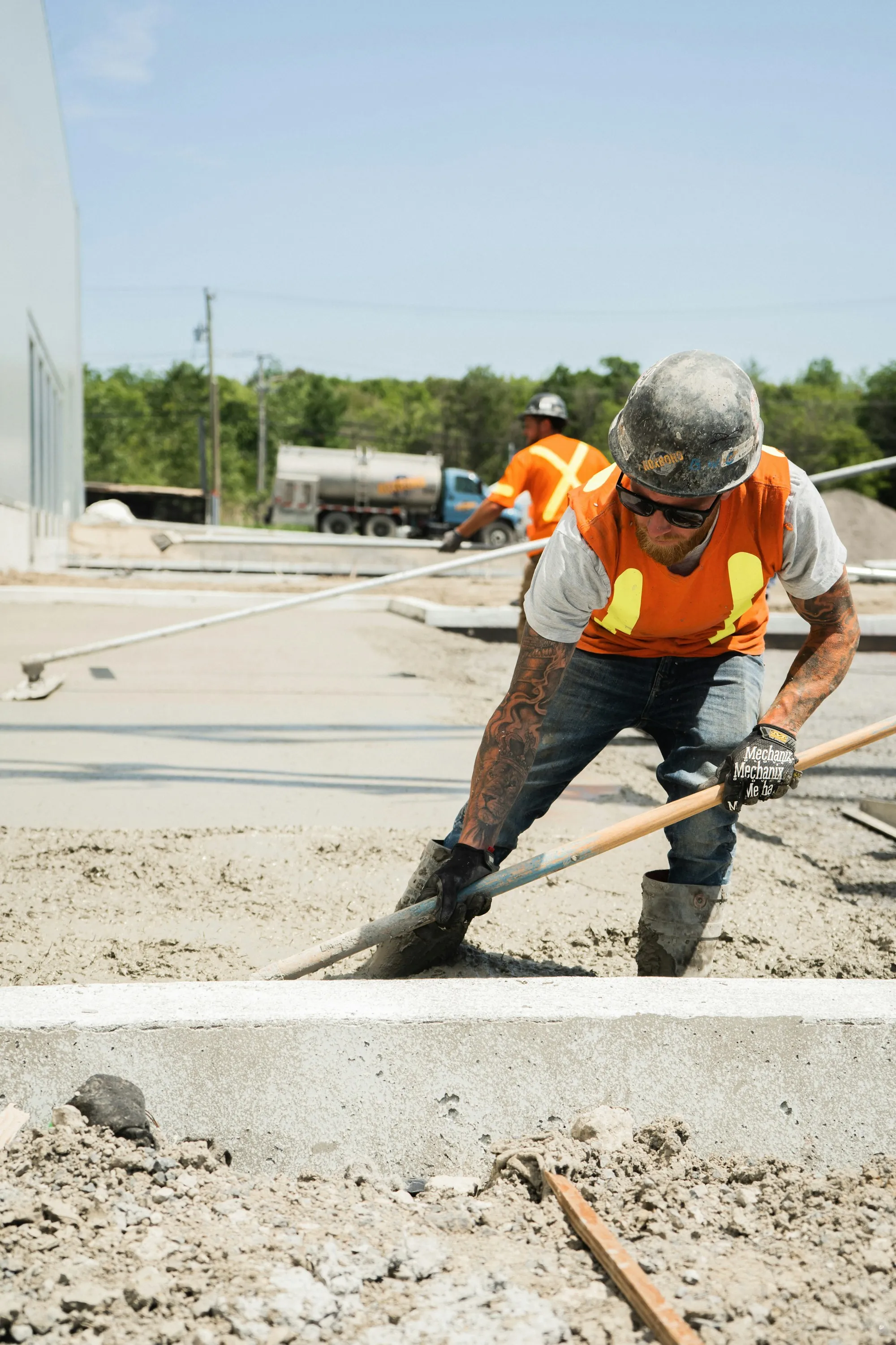
A shed pad seems simple. So does a condenser pad or the strip between the garage and the fence. That is why they get poured on bare dirt with no slope and no joints. Then the shed racks. The condenser tilts. The strip cracks in three places and holds a puddle against the foundation. We do not price small slabs differently from big ones. The sod comes off. The black dirt comes out. Crushed limestone goes in and gets tamped in layers. Forms are staked with a measured drop so water leaves one side. Then the screed, the bull float, a broom drag and an edger pass. Joints get cut at the right spacing for the size. Heavier loads, like a generator or a hot tub pad, get more thickness and steel. Every one of those items shows up on the written price. On Bridgeview's clay, that base layer is what keeps a pad flat through the freeze and the thaw.
Flatwork Line Items
What shows up on the pour sheet.
Sod and soil out
Organic dirt removed. It squishes and holds water.
Limestone base
Spread and tamped in layers. Depth listed.
Measured drop
Forms set so water runs off one edge.
Thickness for the load
More for a generator. Less for a trash can pad.
Broom and edge
Grip on top. Rounded edges that do not chip.
Joints and cleanup
Cuts spaced right. Forms pulled. Soil back in place.
Pad in Three Moves
Size and purpose
Tell us what goes on it and how big. We come measure and check the drainage.
Price on one sheet
Base, thickness, steel, finish. Each a line. Then we schedule.
Dig and pour
Excavate, tamp, form, place, finish, cut. Covered to cure. Site cleared.
Why Our Pads Stay Level
No dirt pours
Limestone under every slab, even small ones.
Water has an exit
Slope set with a level. Not guessed.
Load matched
Heavy equipment gets a heavier slab.
- Tamped limestone
- Measured drop
- Cut joints
- Line-by-line price
Pad on Your List?
Dimensions plus whatever will sit there. That gets you a written number.